



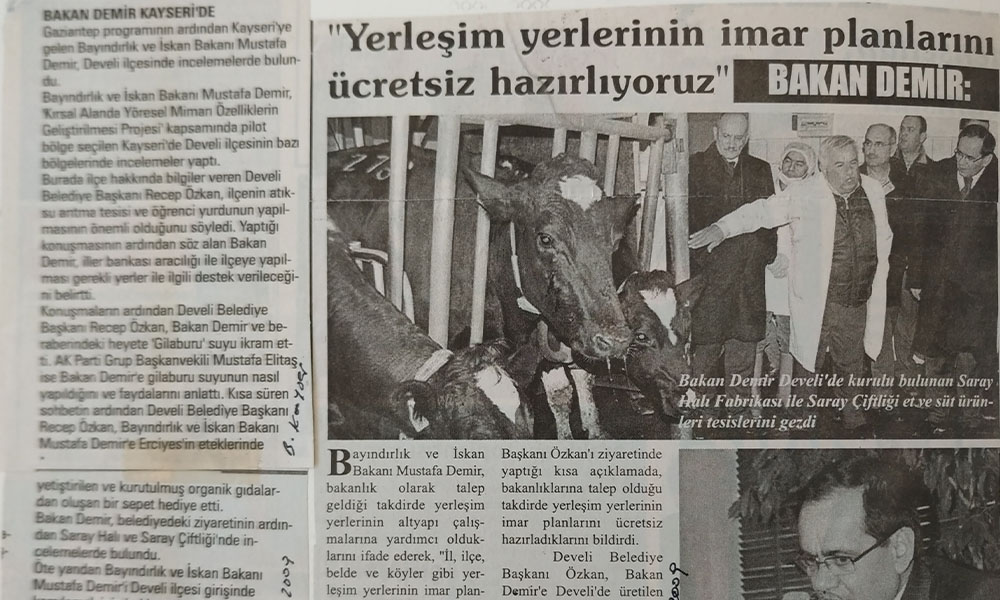
Located at the foothills of Mount Erciyes, within the grounds of the Saray Halı Factory, there is a large-scale dairy production facility housing approximately 2,000 animals. All operations at the facility are carried out through fully automated systems.
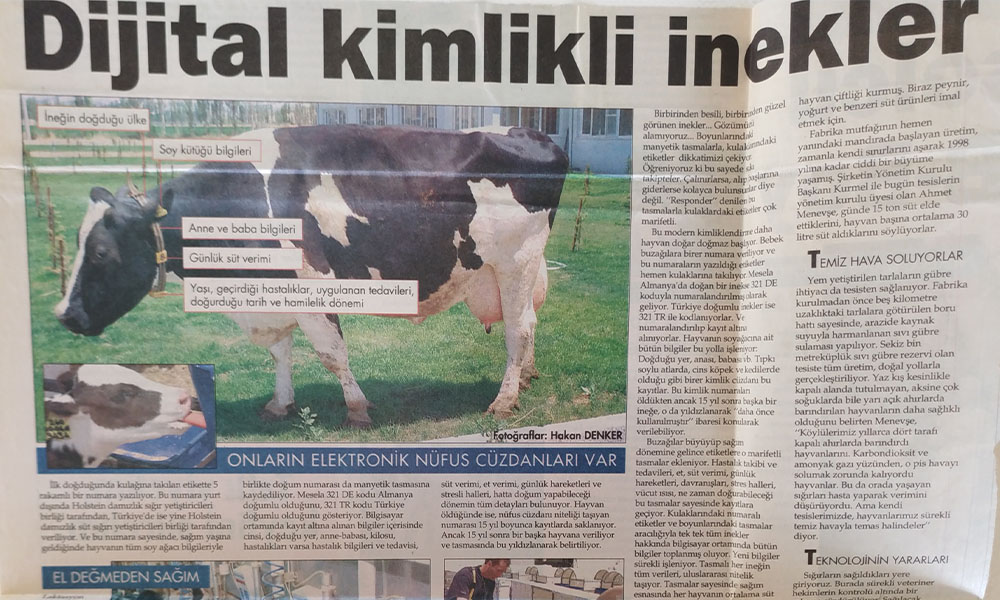
All data related to the cows on the farm is stored via magnetic neck collars and magnetic ear tags. This data tracking system is not only national but also internationally standardized.
The cows, all healthy and well-nourished, immediately draw attention with the magnetic collars around their necks and the tags on their ears. However, these systems are not used for security purposes alone. Known as “responders,” these collars and tags represent advanced technology capable of monitoring the entire life cycle of each animal.
Digital Identification from Birth
This modern identification process begins immediately at birth. Newborn calves are assigned a unique identification number, which is instantly attached to their ears via tags.
For example:
A cow born in Germany is identified with the code 321 DE.
A cow born in Turkey is identified with the code 321 TR.
Through this system, all pedigree information, including place of birth, mother, father, and lineage, is fully recorded. Similar to purebred horses or pedigree cats and dogs, each animal is issued a digital identity card.
These identification numbers remain in the system for 15 years after the animal’s death and may only be reassigned afterward, clearly marked as previously used.
Data-Driven Health and Productivity Monitoring
Once calves mature and enter the milking period, magnetic neck collars are added to their ear tags. These collars enable continuous monitoring of:
Disease tracking and treatment
Milk and meat yield
Daily movement and behavior
Stress levels
Body temperature
Expected calving periods
During milking, each animal’s average milk yield, milking duration, and early signs of potential illnesses can be detected instantly. All data is continuously updated and stored digitally.
A Farm in Develi
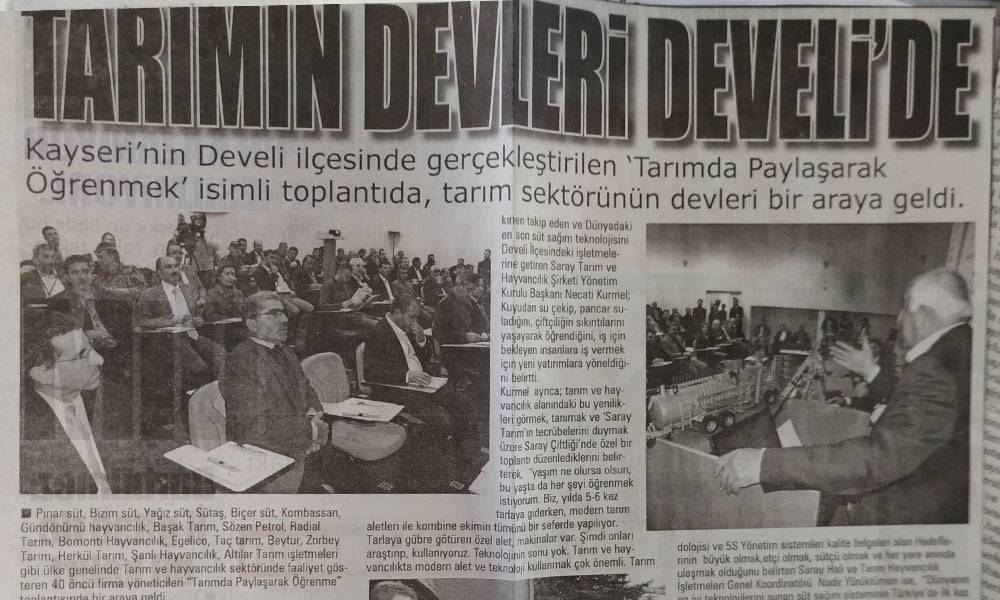
All of this advanced infrastructure is located in Kayseri, at the foothills of Mount Erciyes, in the Develi district. What was once a small livestock operation within the Saray Halı Factory grounds has evolved into one of the region’s largest dairy production facilities.
Founded approximately 25 years ago, Saray Halı’s owner Necati Kurmel, driven by his passion for agriculture and livestock farming, initially established a small cattle farm on factory land. The original goal was to produce basic dairy products such as cheese and yogurt.
Production began in a small dairy unit adjacent to the factory kitchen and experienced significant growth by 1998. According to Chairman of the Board Necati Kurmel and Board Member Ahmet Menevşe, the facility now produces approximately 15 tons of milk per day, with an average yield of 30 liters per animal.
Clean Air and Natural Production
The fertilizer required for feed crop cultivation is supplied directly from the farm. Through a 5-kilometer pipeline, liquid manure is mixed with spring water and delivered to agricultural fields. With a liquid manure capacity of 8,000 cubic meters, production at the facility follows a fully natural cycle.
Animals are never confined to closed indoor spaces throughout the year. Even during extremely cold conditions, they are housed in semi-open barns, which significantly contributes to animal health. Continuous exposure to fresh air improves both well-being and milk productivity.
Hands-Free Milking with Advanced Technology
In the lactation unit, 48 animals can be milked simultaneously. With a daily capacity of up to 1,000 animals, the entire process is managed hands-free through computerized systems.
As animals enter the milking area, their magnetic collars instantly compare current milk yields with historical data. Veterinarians continuously monitor these records, which are then stored in the central system for statistical analysis. The milk is collected in special tanks, cooled to 4°C, and promptly transferred to Pınar Milk tankers for processing.
Controlled Breeding with Imported Semen
Natural mating is not practiced at the facility. Once animals reach breeding age (15–18 months), they are inseminated using imported semen through artificial insemination methods.
Newborn calves receive their first colostrum immediately after birth and are housed in dedicated shelters next to the barns. Until they are weaned, they are fed controlled portions of their mothers’ milk. After the nursing period, they are transferred to barns located at higher elevations within the farm.